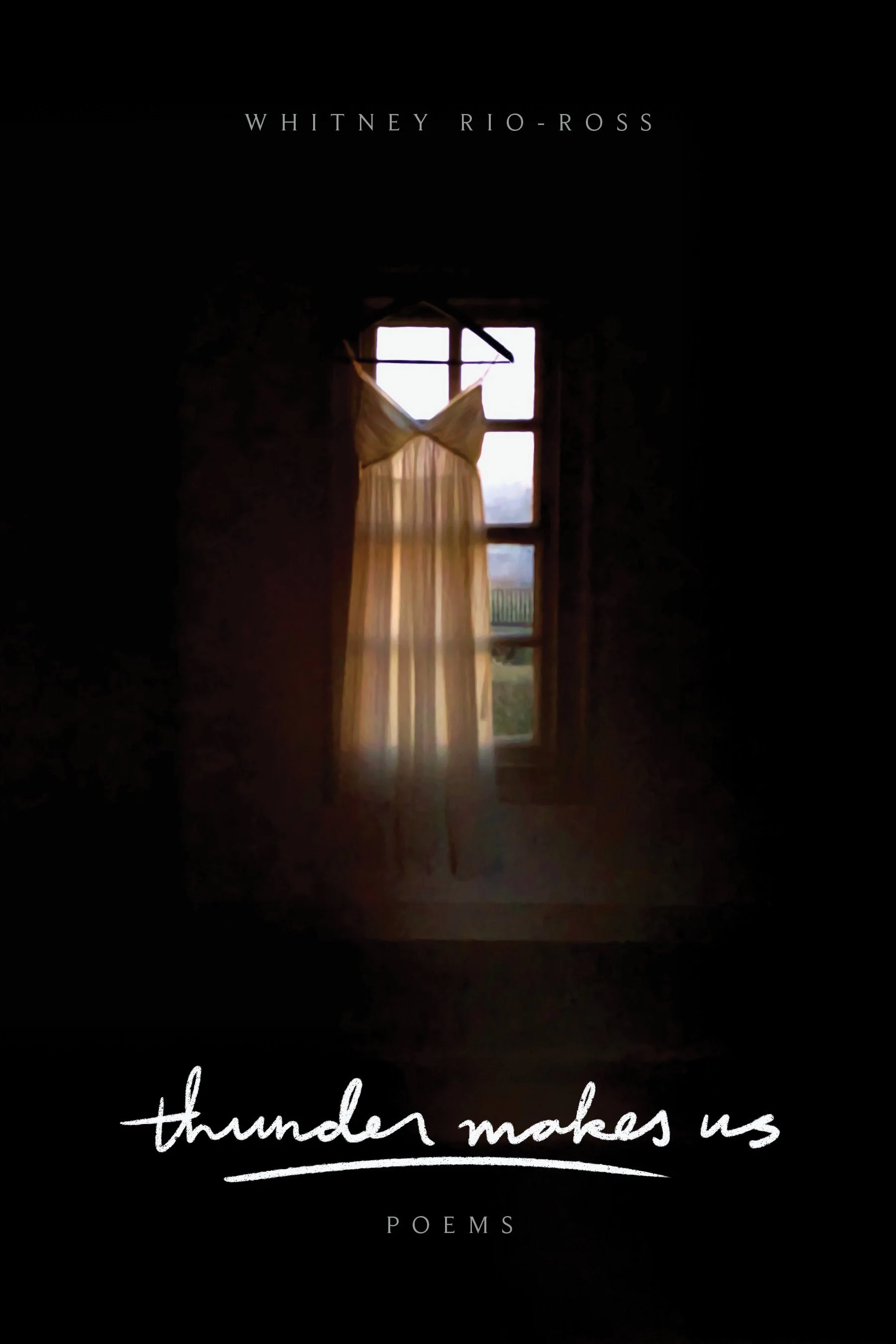
The poems in thunder makes us explore heritage, faith, and womanhood in the American South. They navigate the tension of cherishing the world we’re raised in while also wrestling with the ways it can eventually harm us. In this soulful debut, Whitney Rio-Ross illustrates a woman grappling with the thorny parts of the landscape and family she’s always known, a grappling that yields a hard-fought yet enduring commitment to the work of clear-eyed love.
“[An] effulgent, intelligent, irreverent and reverent, joyous first collection of poems. The poems are sisterly, Southern, sly, surviving a Bible belt pulled tight. We meet a gun-toting, farmer father who has a shooting target sheet in his office, a niece oblivious to a nearby mass shooting, and mothers who mumble of the rapture while their soccer player daughters ‘played / for the Christian league hoping to bring in / the kingdom on second-hand cleats.’ In her poems, religion and poetry do not cancel one another out. Rather she plants an Eden of poems where ‘it is all holy—wilderness, fire, flesh,’ where knowledge brings us together rather than pulls us apart. Her fresh talent is an anodyne for our anxious age: ‘I whisper wilderness / and rise in Tennessee.’ Rio-Ross makes a balm in Gilead. Her dooms and darlings delight and deliver.”
—Spencer Reece, author of The Road to Emmaus and Acts
“Whitney Rio-Ross's thunder makes us braids conviction and doubt, praise and elegy in these exquisite, finely wrought poems. These poems are unflinching and yet honor ‘our involuntary reflex to protect ourselves,’ accepting that bravery and cowardice reside in the same body. Tender and steadfast, Rio-Ross’s speaker examines the mercies and burdens of family and the way gender and trauma shape us and our relationships to each other and the world. Honoring a ‘god of flamboyant frills,’ these poems know that ‘everybody is hungrier than they’ll let on.’ Let Rio-Ross’s poetry feed you. It deserves the prayer of your attention.”
—Amie Whittemore, author of Nest of Matches
“thunder makes us ushers us into the intimate conversations of family myths, recipes, ghost stories, warnings and witness passed down to train a child. It deftly delves the ‘simple geometry’ of a faith and identity desperately growing despite the lies of Sunday school teachers and other elders who led and failed by example. Throughout, Whitney Rio-Ross is a master poet inviting us to reimagine the stories that shaped us, compelling us to reassess what we still carry and what we wish we could leave behind. To read her work is to be profoundly changed.”
—Matthew E. Henry, author of The Third Renunciation
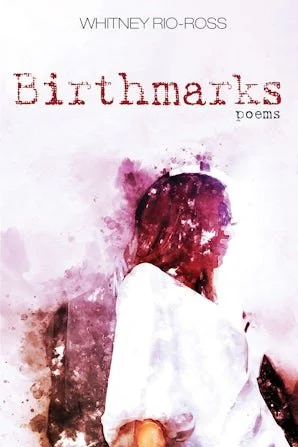
Hagar raises her son across an unwelcoming border. Bathsheba tries to erase her trauma. Another breakup haunts the woman at the well. The poems in Birthmarks contemporize women of the Old and New Testaments and consider who they might be today. Drawing on history, subtext, and common female experiences, they reimagine these characters and their narratives, daring readers to meet the women of the Bible anew.
“Whitney Rio-Ross’s poetry emerges out of what may be the single most damaging silence in the history of Christianity: the voices of women. The songs and speeches she has teased out of those silences are complex, moving, necessary—and now unforgettable.”
—Christian Wiman, poet and essayist, author of My Bright Abyss
“There is poetry and then there is poetry. Whitney Rio-Ross’s Birthmarks—right from the dedication—belongs in that latter category. Her poems are midrashic, attending with adoringly inquisitive and exquisitely irreverent attention to the bodies and stories of our biblical mothers, and reading these lines we cannot help but come aware of our own bodies and our own stories. This is the kind of attention that leaves a mark.”
—Chris Green, Professor of Theology, Southeastern University